


.png)
I want your soul… Kidding. What the hell would I do with that pathetic, half-rotten thing? Keep it.
The word demon comes from the Greek daimon (δαίμων), meaning “divine spirit” or “guiding force.” In ancient times, daimons were not inherently evil but served as intermediaries between gods and humans, embodying wisdom, fate, and hidden knowledge. As religious beliefs shifted, particularly with the rise of Christianity, these entities were demonized—transforming from revered spirits into malevolent beings. Demons are powerful, supernatural entities found across ancient religions, grimoires, and occult traditions. They are often depicted as spirits of chaos, temptation, and hidden wisdom, existing beyond the veil of human understanding. In the Western occult tradition, demons originate from fallen angels, ancient pagan deities, or primordial forces predating recorded history. Texts like the Ars Goetia and The Book of Abramelin describe demons as beings that can be summoned and bound through precise rituals, offering knowledge, power, and influence—often at a cost. Neither wholly evil nor purely malevolent, demons serve as both tempters and teachers, unlocking the doors to forbidden truths for those daring enough to seek them.

ARE ALL DEMONS
PURELY EVIL?
History tells a different story... Demons have long been depicted as purely evil, but is that the full truth? Many cultures saw them as neutral or even protective spirits. Let’s uncover the reality behind these misunderstood beings.
_edited.png)
DEMONS ARE
EVIL!
.png)
MISCONCEPTION #1
"All demons are purely evil."
Reality: Many pre-Christian and occult traditions describe demons as neutral or even beneficial entities. Some were guardians, knowledge bearers, or enforcers of justice. Example: The Shedim in Mesopotamian mythology were considered protective spirits, not malevolent beings.
.png)
MISCONCEPTION #2
"Demons only exist in Christian
mythology."
Reality: Demon-like spirits exist in Zoroastrian, Greek, Hindu, and Japanese folklore, often with different roles. Example: The Greek Daimones were spirits of fate and wisdom, while Japanese Oni could be both protectors and punishing forces.
.png)
MISCONCEPTION #3
"Demons seek to harm humans
at all costs."
Reality: Some demons, like Pazuzu, were invoked for protection against evil, illness, or misfortune. Example: Pazuzu was feared yet also revered as a protector against the demoness Lamashtu, who harmed pregnant women and children.
.png)
MISCONCEPTION #4
"Demons desire human souls."
The idea of demons collecting souls largely stems from Christian folklore and medieval plays rather than actual religious texts. In most grimoires, such as The Ars Goetia, demons are described as possessing knowledge, power, or influence rather than hunting for souls.
.png)
MISCONCEPTION #5
"Demons are ugly,
horned beasts."
The common red-skinned, horned, goat-like image comes from medieval Christian art that merged demons with pagan gods like Pan and fauns. In many older sources, demons appear as shadowy figures, smoke-like entities, or even as radiant beings (e.g., Lucifer’s depiction as a "morning star" in Isaiah 14:12).
.png)
MISCONCEPTION #6
"Demons can be summoned
easily (or accidentally)."
.png)
Elon just laid off thousands of workers, but he says it's for "efficiency."
So let me get this straight… He hoards wealth, crushes workers, and spreads disinformation, but I’m the one ruining society?
.png)
If demons were purely evil, why do so many cultures have legends of spirits that offer knowledge, protection, or even justice?
Modern media (like horror movies) exaggerates how easy it is to summon demons. Historically, demon summoning required rituals, sigils, offerings, and precise conditions—not just saying a name or lighting a candle. Texts like the Pseudomonarchia Daemonum emphasize the strict protocols needed for summoning.
DEMONS AS PROTECTORS AND GUIDES

Some were seen as protective spirits guarding individuals or cities.
The Shedim

Pazuzu
Used to ward off disease and evil spirits, despite his fearsome appearance.

Daevas
Originally neutral spirits, later demonized by religious changes.
Daimones
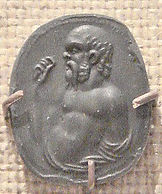
Considered spiritual guides rather than evil beings. Socrates himself claimed to have a personal daimon that guided his moral decisions.

Oni
Some were protectors from misfortune, like Shoki, a demon that warded off disease.
Our understanding of demons has changed over time, influenced by religion, culture, and historical shifts. Whether you view them as guardians, tricksters, or malevolent forces, one thing is certain—the truth is more complex than what we’ve been told
CONCLUSION:
MEET THE
DEMONS

THIS IS BAPHOMET
.png)
.png)
THIS IS
SATAN
This is Baphomet. A goat-headed symbol of balance, knowledge, and duality. Not an actual demon—just a misunderstood mystical icon.
This is Satan. The eternal villain of Christian lore, blamed for everything from political corruption to Wi-Fi outages.
One is a symbol of balance and enlightenment. The other is a scapegoat for everything wrong in the world. People often mix them up—mostly the ones who don’t read past the headlines.
DEMONS YOU'D ACTUALLY WANT TO MEET
ASMODEUS
The Lustful Architect
Origins & Mythology: Asmodeus, often linked to Persian and Jewish traditions, is the demon of lust and excess. He appears in the Book of Tobit and medieval demonology, often associated with ruining marriages and tempting humans into indulgence.
Personality & Role: Think of him as the CEO of Forbidden Desires Inc.—where temptation meets urban planning. In some myths, he’s a patron of builders, overseeing grand projects while ruining a few weddings on the side.
Pop Culture Appearances: Featured in Renaissance demonology, The Lesser Key of Solomon, and even Dungeons & Dragons.
Fun Fact: Supposedly, Asmodeus hates water—so next time you feel particularly sinful, maybe take a swim?

SURGAT
The Lockpicker of Hell
Origins & Mythology: Little is known about Surgat, but he's famous for his ability to open locked doors and break barriers. Personality & Role: Basically, a supernatural locksmith with no moral compass. If there’s something forbidden behind a door, you can count on Surgat to get you inside—whether you wanted to be there or not.
Fun Fact: Surgat is mentioned in grimoires like The Grimoire of Pope Honorius, often as a demon who makes the impossible possible—a patron saint for hackers and escape artists, perhaps?

VOLAC
The Snake-Riding Whisperer
Origins & Mythology: A fallen angel turned demon, Volac is known for revealing hidden treasures and commanding serpents.
Personality & Role: Think of him as Hell’s smooth-talking financial consultant—he’ll tell you where the wealth is, but don’t expect him to say how to keep it.
.png)
Pop Culture Appearances: Featured in The Lesser Key of Solomon as a high-ranking demon. Wrongly turned into a spooky nun in The Conjuring 2 and The Nun.
MALPHAS
The Demon Contractor
Origins & Mythology: A high-ranking infernal duke, Malphas appears in grimoire lore as a master builder who constructs fortifications and reveals enemy secrets—except, of course, he lies.

Personality & Role: If Asmodeus is the CEO of Temptation, Malphas is the shady government contractor of Hell, promising fortresses but ensuring there’s a weak spot just in case.
Pop Culture Appearances: Found in demonological texts like The Lesser Key of Solomon.
Fun Fact: Malphas accepts sacrifices but prefers to deceive those who offer them. In other words, you might not want to sign that contract.
BEELZEBUB
The Lord of the Flies
Origins & Mythology: Originally a Philistine deity, later demonized in Christian lore as one of the highest-ranking demons, often equated with Satan himself.
Personality & Role: Imagine a powerful bureaucrat running Hell’s PR department. He’s about influence, control, and keeping things in order—despite his unfortunate association with literal flies.
Pop Culture Appearances: He appears in Paradise Lost, The Divine Comedy, and The Lesser Key of Solomon.
Fun Fact: The nickname “Lord of the Flies” comes from a mistranslation of his name (Ba‘al Zəbûb), but considering how much political figures love him, the title seems fitting.

AGARES
The Fallen Scholar
Origins & Mythology: Once an angel, now a demon who teaches languages, causes earthquakes, and makes runaways return home—talk about a weird résumé.
Personality & Role: Imagine a bitter ex-professor who got kicked out of Heaven’s faculty and is now running a linguistics crash course in Hell, all while summoning earthquakes for dramatic effect.
Pop Culture Appearances: Described in The Lesser Key of Solomon as one of the dukes of Hell.
.png)
Fun Fact: He’s often depicted as a child riding a two-headed dragon—which is either terrifying or just really impressive. But Hollywood looked at an ancient demon on a two-headed dragon and thought, “Eh, let’s make him a demonic nun instead.”
STOLAS
The Owl-Eyed Scholar
Origins & Mythology: A high-ranking demon in The Ars Goetia, Stolas is a Great Prince of Hell who teaches astronomy, herbalism, and the secrets of the stars. Basically, he’s Hell’s favorite nerd.

Personality & Role: Less "chaos and destruction," more “Let’s discuss the chemical composition of Saturn’s rings over tea.” If you’re looking for knowledge, he’s your guy—but be prepared for some long-winded lectures.
Pop Culture Appearances: He’s a well-known figure in demonology, but modern audiences might recognize him from Helluva Boss, where he’s portrayed as a lovesick, aristocratic owl-demon who’s just as dramatic as he is powerful.
Fun Fact: Despite being a fearsome prince of Hell, he’s often depicted as an adorably awkward owl—which makes summoning him feel less like dealing with a demon and more like inviting a professor to a book club.
Fun Fact: Agares’ role in teaching languages and forcing people back home sounds suspiciously like an unpaid internship or a government policy.
CLAUNECK
The Banker of Hell
Origins & Mythology: Mentioned in The Grimoire of Honorius, Clauneck is known for controlling wealth and business success. If money makes the world go round, Clauneck is probably spinning the wheel.

Personality & Role: He’s Hell’s ultimate venture capitalist—capable of making people rich but just as likely to teach them a lesson in financial ruin if they misuse their fortune.
Pop Culture Appearances: Rarely appears in pop culture, but he’s every investor’s dream (or nightmare) in occult circles.
Fun Fact: He understands all business and financial matters. Too bad most modern billionaires seem to have never consulted him.